

How to Choose a Company for Work at Heights (and What to Watch Out For)
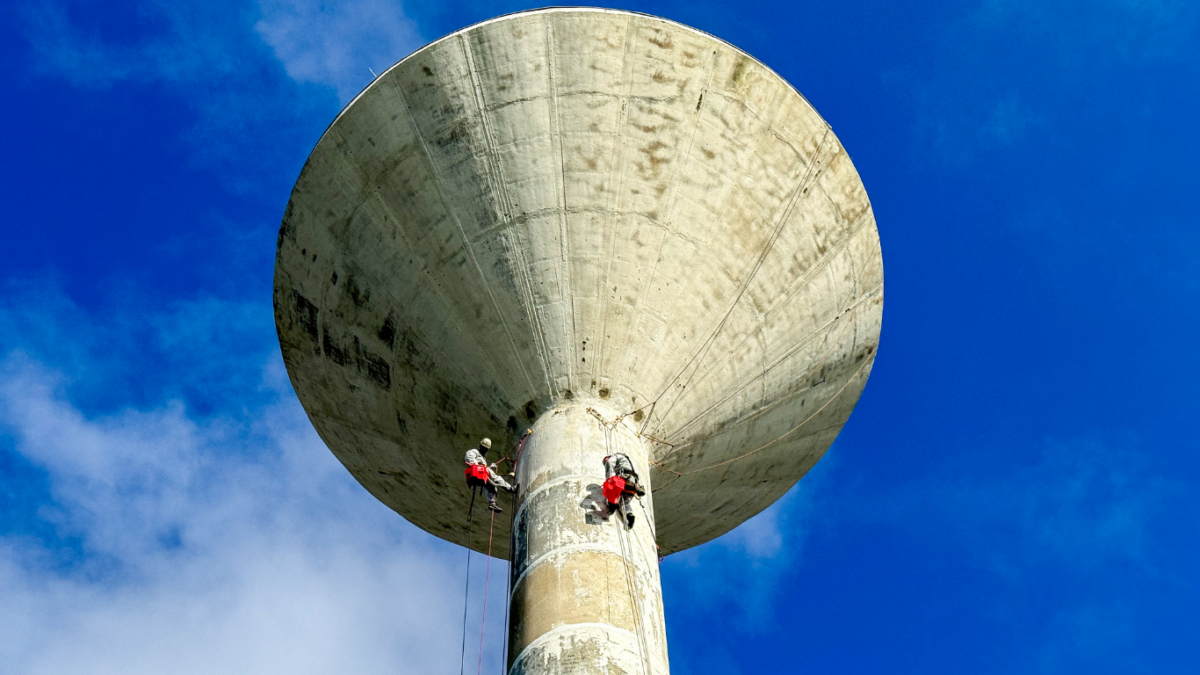
Work at heights is not a routine service. Mistakes here don’t just have financial consequences; they can also endanger people, operations, and the entire project. Yet, when selecting a contractor, decisions are often based on price or availability. Only later is it determined whether the chosen approach was correct.
This article summarizes what to focus on when selecting a company for work at heights—particularly from the perspective of an investor, facility manager, or technical supervisor.
1. Focus on the work system, not just the price
The differences between companies aren’t just about price. The key difference lies in how they approach the project.
A quality contractor:
- prepares a risk analysis
- proposes a technical procedure
- takes the building’s operations into account
- and handles the subsequent documentation
A cheaper bid often means that these steps are skipped or addressed only on-site. We often take on projects where price was the primary consideration initially. It is only when the work becomes complicated or operations are halted that the lack of a proper solution proposal becomes apparent.
2. Verify qualifications and safety management practices
Working at heights is not just about “knowing how to climb.” What matters most is how the safety of the entire process is managed.
Pay particular attention to:
- worker qualifications
- how the job is managed
- on-site safety responsibility
At some companies, safety is managed systematically—typically according to international standards such as IRATA.
This means that the work isn’t just about an individual’s experience, but about an established process that is repeated on every job.
Such an approach usually includes:
- clearly defined work procedures
- supervision by a responsible person
- planning and control of individual steps
System vs. Experience
On the market, you will find both highly experienced smaller firms and larger companies operating according to established standards.
The difference lies in the approach:
- experience relies on individuals
- the system relies on established rules, control, and accountability
Standards such as IRATA represent precisely this systematic approach—and for the investor, they mean greater predictability and control over the course of the project.
3. Ask about the specific approach
Every project involving work at heights has multiple solution options:
- rope access
- scaffolding
- platforms
- a combination of methods
The difference between an average company and a high-quality one is that:
👉 it doesn’t offer just one option, but proposes the most suitable one
A good contractor can explain to you:
- they chose a specific technology
- how it will affect the project timeline
- what the impact on operations will be
4. Review experience from similar projects
References are not a formality. For work at heights, they are of critical importance.
Focus on:
- experience with the type of building (industrial, office, energy…)
- experience with specific activities (inspections, installations, painting…)
- the ability to handle non-standard situations
A company with a track record of similar projects:
- better assesses risks
- responds more quickly to changes
- and minimizes delays
5. Check the equipment and its management
Equipment is a key component of safety. It’s not just about what the company uses, but how it works with it.
What matters is:
- regular inspection and inventory of equipment
- tracking of service life
- clear accountability for its condition
At high-quality companies, equipment management is part of the system, not a coincidence.
6. Pay attention to communication and preparation
The very first contact reveals a lot.
Watch for:
- how quickly and specifically the company responds
- whether it asks follow-up questions
- whether they are interested in the details of the project
If someone sends a quote without understanding the situation, it’s a sign that the project won’t be prepared in detail
7. Price is important—but only at the end
The price should be the result of the proposed solution, not a substitute for it.
The difference between quotes often isn’t in the hourly rate, but in:
- what’s included in the price
- how well the implementation is prepared
- what risks the company assumes
A cheaper solution can end up costing more:
- project delays
- operational restrictions
- or the need for repairs
Summary: What a quality company for work at heights should offer
When selecting a contractor, focus on whether they:
- work according to a clear system (not improvisation)
- prepares the job in advance (analysis, design, plan)
- has a qualified team and supervision
- has experience with similar projects
- takes responsibility for both safety and the result
Work at heights isn’t just about execution. It’s about deciding how the job will be prepared. And it is precisely that decision that has the greatest impact on safety, the process, and the final cost.